
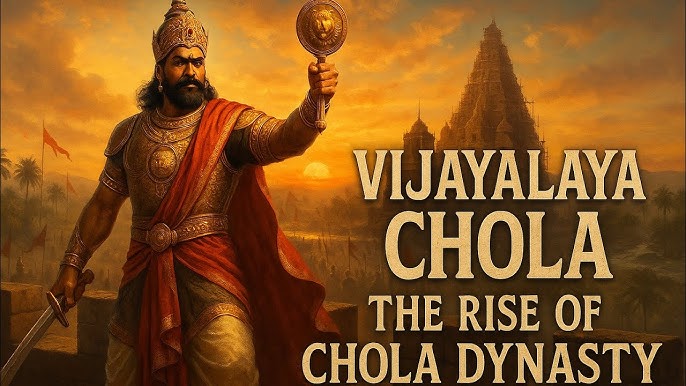

The founder of the medieval Chola dynasty, the powerful South Indian empire that would go on to dominate much of the Indian subcontinent’s southern region and extend its influence across Southeast Asia, is generally credited to Vijayalaya Chola, who established the dynasty’s medieval revival around 848 CE by capturing the city of Thanjavur, which would go on to serve as the Chola capital for much of the dynasty’s subsequent history.
Understanding the Chola dynasty’s founding requires distinguishing between two distinct historical periods often referenced under the same dynastic name. The Cholas trace their lineage back to an earlier, ancient Chola kingdom mentioned in early Tamil Sangam literature, dating back many centuries earlier, but this ancient Chola line had declined in power and prominence well before Vijayalaya’s emergence, making his ninth-century revival the more historically significant founding moment for the powerful medieval empire most commonly associated with the Chola name in mainstream historical discussion.
Vijayalaya Chola began his rise as a relatively minor, subordinate ruler under the Pallava dynasty, which controlled much of the surrounding region at the time. Taking advantage of a period of regional instability, he captured Thanjavur from the Muttaraiyar chieftains who had been ruling the area, establishing what would become the foundation for the resurgent Chola state and marking the genuine beginning of the medieval Chola dynasty’s rise to eventual prominence.
While Vijayalaya’s own reign established the dynasty’s foundational territorial base, the Chola empire’s most celebrated period of expansion and cultural flourishing came under his successors, particularly Rajaraja Chola I and his son Rajendra Chola I, who ruled during the late tenth and early eleventh centuries and expanded Chola territory dramatically through extensive military campaigns, transforming the kingdom Vijayalaya had founded into one of the most powerful and influential empires in medieval Indian history.
Rajaraja Chola I’s reign is particularly celebrated for major administrative reforms, the construction of the magnificent Brihadeeswarar Temple in Thanjavur, a UNESCO World Heritage site that remains one of the great architectural achievements of medieval South Indian civilization, and significant naval expansion that helped establish Chola influence across maritime trade routes extending into Southeast Asia.
Rajendra Chola I extended his father’s achievements further still, leading a celebrated naval expedition that extended Chola influence as far as the Srivijaya kingdom in present-day Indonesia, representing one of the most ambitious overseas military and naval campaigns undertaken by any Indian dynasty during this historical period, and reflecting the Chola empire’s genuinely significant naval capabilities at its height.
The Chola administrative system, particularly its sophisticated approach to local self-governance through village assemblies, has drawn considerable historical attention and is frequently cited by historians as an unusually advanced system of decentralized local administration for its era, reflecting the broader administrative sophistication that characterized Chola rule at its peak under Vijayalaya’s successors.
The dynasty’s cultural legacy extends well beyond its military and administrative achievements, encompassing significant contributions to Tamil literature, classical Indian bronze sculpture particularly associated with Chola-era Nataraja bronzes, and temple architecture that continues to be studied and celebrated as representing a particularly refined and influential period of South Indian artistic and architectural achievement.
For anyone researching the origins of this celebrated South Indian dynasty, Vijayalaya Chola’s ninth-century capture of Thanjavur represents the historically precise founding moment of the medieval Chola empire that would go on to achieve its greatest prominence under his successors, distinguishing this resurgent medieval dynasty from the earlier, more ancient Chola lineage referenced in much older Tamil literary sources.
The distinction between Vijayalaya’s foundational role and his successors’ later, more celebrated achievements mirrors a pattern seen across several other ancient Indian dynasties, where the figure who first establishes a lasting territorial base is not always the same ruler whose reign later generations most closely associate with the dynasty’s greatest cultural and military accomplishments.